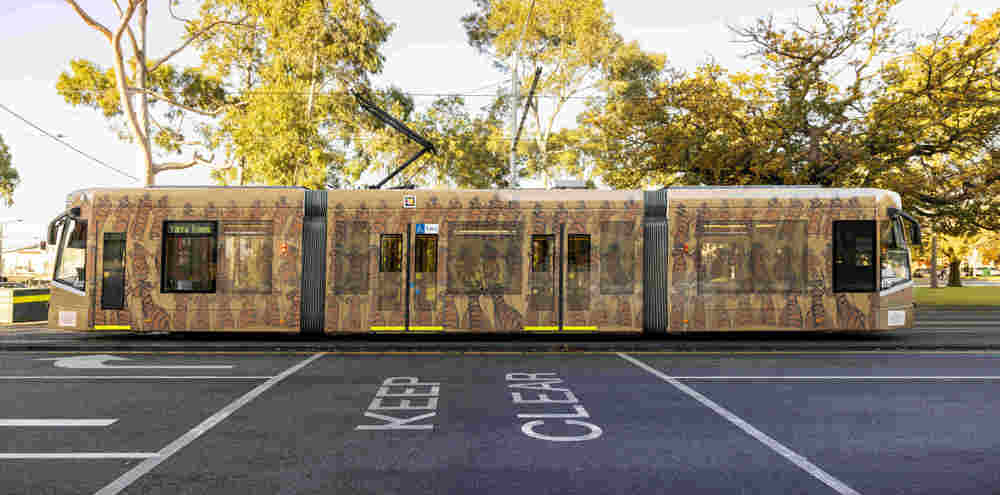
Melbourne Art Trams
Melbourne is undoubtedly Australia's capital of the arts. Each year the city's iconic trams combine with the city's vibrant arts scene in a travelling exhibition of local artists.
The Melbourne Art Trams program has a storied history, born out of the desire to merge art with everyday life. It reflects the city's commitment to fostering creativity and community spirit. Since its inception in 1978, the program has transformed our most famous icons into moving canvases, bringing art to the streets to make it accessible to everyone.
Formerly known as Transporting Arts, the first iteration of the program ran from 1978 to 1993. During this time over 30 trams were adorned with the works of prominent local artists, turning them into roving artworks and conversation starters for millions of passengers. After a two-decade break, it came back to life in 2013 as part of the Melbourne Festival, marking a new era for the program.
The selected works are as diverse as the city itself – bold, abstract, intricate and narrative-driven. They reflect the deep cultural landscape of Melbourne. Discover more about the 2026 artists below and explore the stories and inspirations behind this year's collection.
Let's continue to support, celebrate, and recognise the incredible talent that makes our city unique.
The 2026 Program
The 2026 Art Trams collection celebrates Victoria's First Peoples. The six trams – delivered in collaboration between Yarra Trams, Transport Victoria and RISING – convey the limitless possibilities of First Peoples imagining.
The 2026 works have been curated by Kate ten Buuren (Taungurung).
Find more out here.
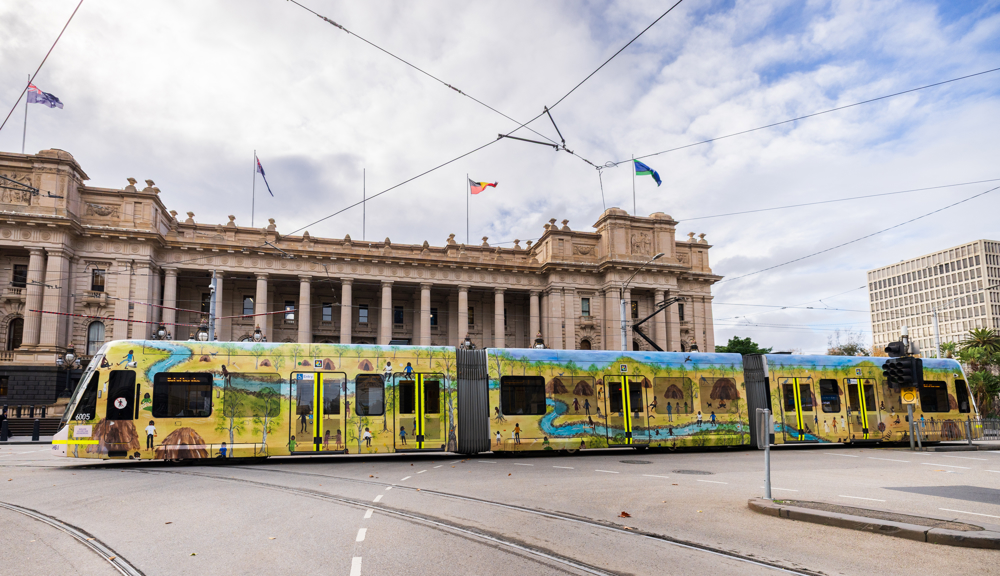
Aunty Marlene Gilson OAM – Wadawurrung
Artwork title – Happy Families – time when we all lived together
Tram – 6005
Routes – 11, 86 and 96
"We used to go down to the river as kids. We'd be there all day swimming, fishing and having fun. My painting blends some of my memories with stories that I've been told. It shows a time when many families would come together, making do with what we had; playing together, building things, lighting fires, caring for one another and living together as one big happy family camp."
Natasha Carter – Dja Dja Wurrung, Yorta Yorta and Jaru
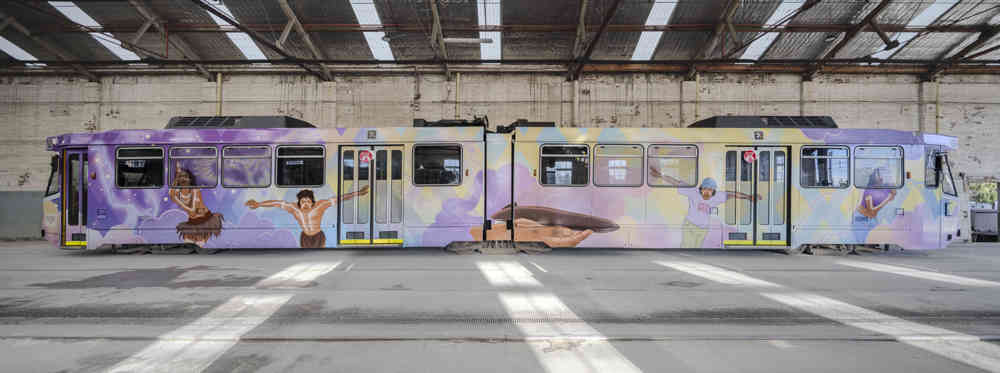
Artwork title – Stories from the First Sunrise
Tram – 2017
Routes – 3, 64 and 67
"We connect to our Ancestors and Country through dance, painting up, weaving and making adornments. This is a story that connects the people of the past; dancing in the night sky, to the people of the future; dancing in the dawn of a new day. As cultural peoples in the now, we traverse broader society grounded in our Law and Ceremony, always."
Zena Zada Cumpston – Barkandji/Kurnu
Artwork title – ngamaka/mother #1, #2, #3
Tram – 3502
Routes – 5, 6, 16, 72
"The abundance our mother (Country) offers is ever-present. She watches you carefully as you take. If we fail to be in reciprocity with her, our access to abundance can, and will, be denied. ngamaka/mother speaks to active custodianship, intergenerational learning and the need to practice, hold and re-invigorate all that Ancestors have passed on. ngamaka/mother insists that we have been handed all we need to thrive and to enact healing for people and for Country."
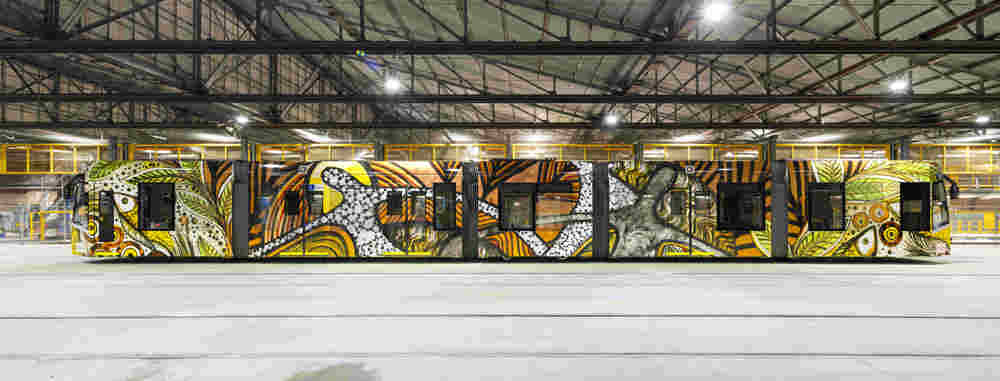
Sonja Hodge – Lardil
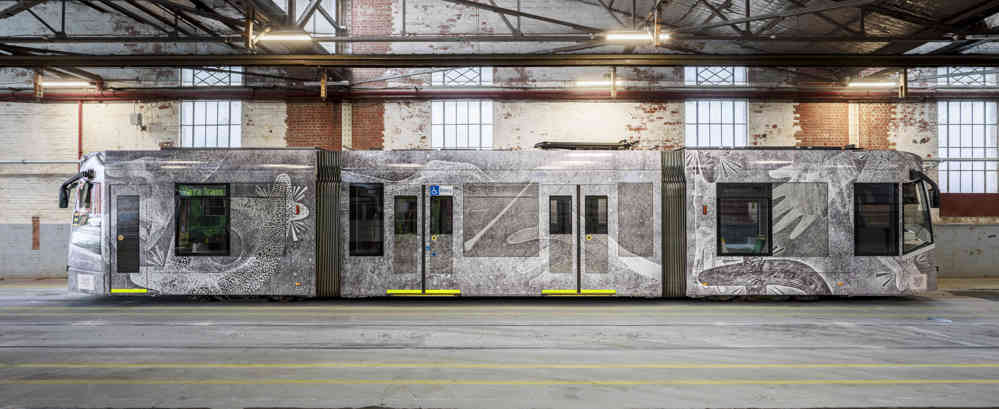
Artwork title – spirits, yaka & jirndi
Tram – 5002
Route – 6 and 19
"This work reflects my connections to family, belonging to Country, loss, and how I feel and see myself in this world. It is a celebration and a homage to all the strong women and men who came before me and the path made easier for me by them. I dedicate my work to my children and mob; I want to show them what is stirring inside me and what I carry with me always."
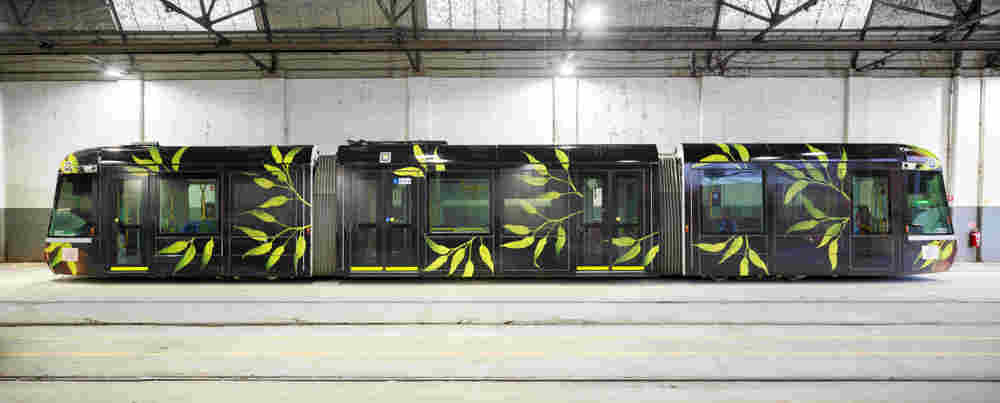
Jenna Mayilema Lee – Larrakia, Wardaman, KarraJarri
Artwork title – burn before reading
Tram – 3023
Routes – 48 and 109
"After fire, eucalypts produce vivid green growth against their charred, blackened trunks. In burn before reading each leaf is cut from the pages of 'Aboriginal Words and Place Names' by A.W. Reed, a flawed, still-in-print colonial text that undermines the richness of First Nations languages. By reconstructing these pages, the tram becomes a living eco-system of words, imagining language as both archive and future, asserting that First Languages, like Country itself, endure beyond trauma."
Mitch Mahoney – Boonwurrung and Barkindji
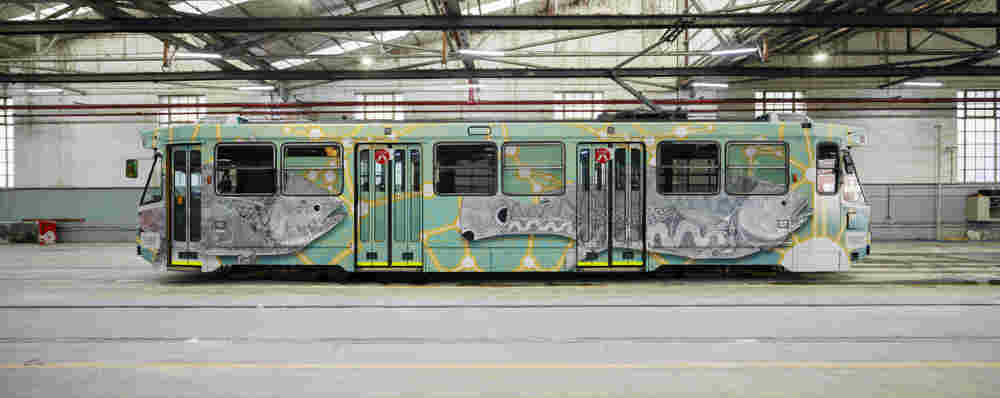
Artwork title – Pale Blue
Tram – 236
Routes – 12
"The Mulloway and the Tuna are two of the largest and most powerful fish to visit Naarm's waters. These species carry old stories of the movements of Sea Country. Pale Blue brings the celestial and the marine together, imagining a space where sky and sea meet – where Ancestral memory, ecological knowledge and Blak imagination flow into one another. The fish become not just animals, but living archives, carrying stories for the next generation."
Beruk (William Barak) – Wurundjeri, Woi-wurrung
Artwork title – Corroboree (Women in Possum Skin Cloaks)
Tram – 3532
Routes – 5, 6, 16 and 72
"To the colonial world he was William Barak, to his people he is Beruk. As Beruk's descendants we present this exhibition in his name, the name he was given at birth, spelt as it should be pronounced."
Until his passing, Beruk was the leader at Coranderrk Aboriginal Station Healesville, and a fighter of rights and freedom for all displaced people. He liaised between the protectorate and residents of Coranderrk, balancing his culture and political actions while adapting to changing conditions in his own life. He was an accomplished painter, an activist, a diplomatic leader, and trailblazer for generations to come. He remains a source of knowledge for Wurundjeri people through his works and his influence expands around the globe.
The 2025 Legacy Tram honouring Beruk (William Barak) will remain on the tracks until August 2026.